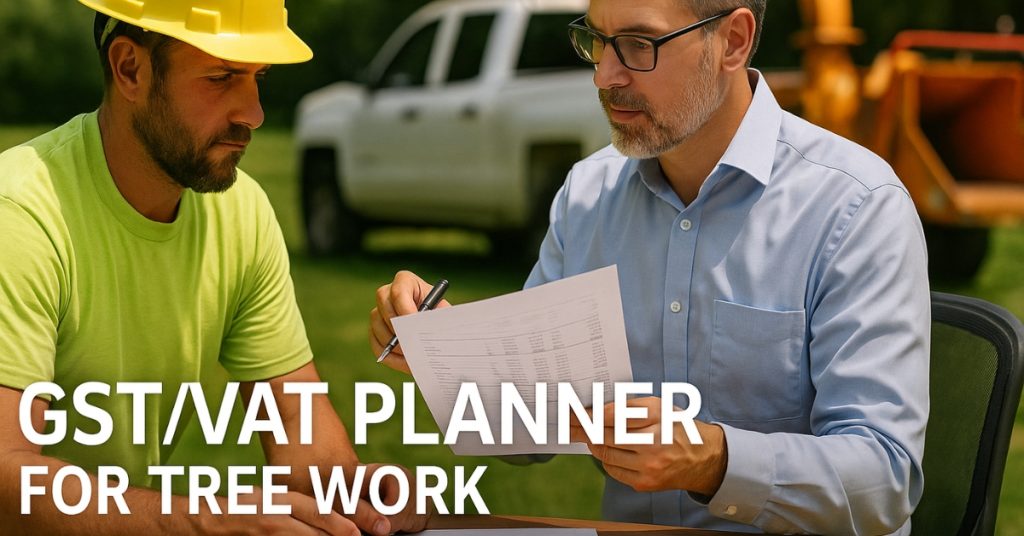
If you run an arborist business in Australia, there is a good chance you have used subcontractors at some point. Maybe you bring in a specialist climber for technical removals, hire a crane operator for large jobs, or engage another arborist to handle overflow work when you are fully booked. Subcontracting is a practical way to scale your capacity without the fixed costs of permanent employees.
But here is the problem: many arborist business owners treat subcontractor arrangements casually. A handshake deal, a verbal agreement, or a one-line text message confirming the rate. This approach might work when everything goes smoothly, but when something goes wrong – an injury on site, a dispute over payment, or an ATO audit – the absence of a proper written agreement can be devastating.
A well-drafted subcontractor agreement protects both parties. It clarifies expectations, allocates risk appropriately, and provides evidence of a genuine contractor relationship if the ATO comes asking questions. In this guide, we will walk you through what every arborist subcontractor agreement should include, the critical difference between employees and contractors, insurance and tax considerations, and the red flags that could see your subcontractor reclassified as an employee.
Why Written Subcontractor Agreements Matter
Verbal agreements are legally enforceable in Australia, but they are almost impossible to prove when disputes arise. Without a written agreement, you are relying on memory and goodwill – neither of which holds up well in court or during an ATO audit.
A written subcontractor agreement provides several key benefits:
Clarity of expectations. Both parties know exactly what work is to be performed, when, and to what standard. This reduces disputes about scope and quality.
Evidence of contractor status. The ATO looks at the substance of a working relationship, not just what you call it. A well-drafted agreement that reflects genuine contractor characteristics is strong evidence that the relationship is what you say it is.
Risk allocation. A proper agreement makes clear who is responsible for insurance, equipment, safety compliance, and liability for defective work.
Payment terms. No ambiguity about rates, when invoices are due, and what happens if payment is late.
Termination provisions. How either party can end the arrangement, and what notice is required.
If you have been engaging subcontractors on informal terms, now is the time to formalise those arrangements. The cost of a proper agreement is trivial compared to the cost of getting it wrong.
Employee vs Contractor: Key Differences
This is the single most important issue when engaging anyone to work in your arborist business. Getting the classification wrong can result in significant financial penalties, back-payment of superannuation, PAYG withholding obligations, and even prosecution.
The ATO Tests for Contractor Status
The ATO does not simply accept your characterisation of a worker as a contractor. They look at the substance of the relationship using a multi-factor test. The key factors include:
Ability to subcontract or delegate. Can the worker send someone else to do the job in their place? A genuine contractor typically has this right. An employee must perform the work personally.
Basis of payment. Is the worker paid for a result (completing a specific job or project), or for their time (hourly or daily rate regardless of output)? Payment for results points to a contractor relationship.
Provision of equipment. Does the worker supply their own significant equipment – chainsaw, chipper, truck, climbing gear – or do they use yours? A genuine contractor usually provides their own tools of trade.
Control over how work is performed. Do you direct the worker on how to complete the work, or do they exercise their own judgment and methods? The more control you exercise, the more it looks like employment.
Risk and opportunity for profit. Does the worker bear commercial risk? Can they make a profit or loss on the job? If they quote a fixed price and wear the cost if the job takes longer than expected, that points to a contractor relationship.
Exclusivity. Does the worker provide similar services to other clients, or do they work exclusively for you? Working only for one principal suggests employment.
Integration into the business. Is the worker integrated into your business operations – wearing your uniform, using your email, appearing on your website as staff? Integration points to employment.
No single factor is determinative. The ATO considers the relationship as a whole. But if most factors point to employment, a written agreement calling the worker a “contractor” will not save you.
For the full ATO guidance, visit the employee or contractor decision tool on the ATO website.
Risks of Getting the Classification Wrong
If the ATO determines that your subcontractor should have been classified as an employee, the consequences are serious:
Superannuation guarantee charge (SGC). You will owe back-paid superannuation for the entire period, plus interest and an administration fee. The SGC is not tax-deductible, so it comes straight out of your pocket.
PAYG withholding. You should have been withholding tax from the worker’s payments. If you did not, you may still be liable for the unpaid amounts, even though the worker received gross payments.
Workers compensation. Your workers compensation insurer may seek to recover costs if a worker you classified as a contractor is injured and later determined to be an employee.
Penalties. The ATO can impose penalties for incorrect classification, particularly if they believe the arrangement was designed to avoid employment obligations.
Fair Work claims. A worker reclassified as an employee may be entitled to back-pay for leave entitlements, penalty rates, and other award conditions.
We have seen arborist businesses hit with bills of $50,000 or more when contractor arrangements have been unwound. The solution is to structure your relationships correctly from the start.
For more on this topic, see our detailed guide on hiring your first arborist employee.
What to Include in an Arborist Subcontractor Agreement
A comprehensive subcontractor agreement should cover the following areas. While you can find generic templates online, it is worth having a document tailored to the arboriculture industry – the work is specialised, the risks are significant, and the insurance requirements are specific.
Parties and ABN Details
Clearly identify both parties by their full legal names, trading names (if different), and Australian Business Numbers. The subcontractor must have an ABN to avoid PAYG withholding at 47%.
Include the date the agreement commences and whether it is for a specific project or an ongoing arrangement.
Scope of Work
Define the services the subcontractor will provide. Be specific. Rather than “tree services,” describe the actual work: “sectional tree removals, canopy pruning, and stump grinding as directed on a job-by-job basis.”
Include any limitations or exclusions – for example, if certain high-risk work (like powerline clearance) is not included, say so explicitly.
Payment Terms and Rates
Set out how the subcontractor will be paid:
- Rate structure: Hourly rate, daily rate, or fixed price per job
- How jobs are quoted and accepted: Who provides quotes to clients, and how are prices agreed with the subcontractor?
- Invoicing requirements: What information must invoices include? When should they be submitted?
- Payment timing: Within 7 days of invoice? 14 days? 30 days?
- GST: Is the subcontractor registered for GST? If so, their invoices should include GST.
Genuine contractors typically invoice for completed work rather than receiving regular payslips. The payment terms in your agreement should reflect this.
Insurance Requirements
This is critical for arborist work. Your agreement should specify:
Public liability insurance. The subcontractor should hold their own public liability insurance with adequate coverage – typically a minimum of $10 million, or $20 million if you work on council or commercial contracts.
Workers compensation or personal accident insurance. Even if the subcontractor has no employees, they should have personal accident cover. Some principal contractors require this as a condition of engagement.
Certificates of currency. The subcontractor must provide current certificates of insurance before commencing work and whenever policies are renewed.
Whose insurance responds to what. Be clear about whose insurance covers damage caused by the subcontractor’s work. Generally, the subcontractor’s insurance should cover claims arising from their acts or omissions.
We will cover insurance in more detail below.
Equipment and Materials
Specify who provides what:
- Does the subcontractor supply their own chainsaw, climbing gear, and PPE?
- Do they provide their own vehicle, or do they travel in your truck?
- Who supplies consumables like fuel, oil, and ropes?
- If the subcontractor uses your equipment, how is this accounted for (deducted from payment, charged at a rate, etc.)?
A genuine contractor typically supplies their own significant equipment. If you are providing everything except the labour, that is a strong indicator of an employment relationship.
Safety Obligations
Arboriculture is a high-risk industry. Your agreement should address:
Compliance with WHS legislation. Both parties must comply with all applicable work health and safety laws. The subcontractor is responsible for their own safety and the safety of anyone they endanger through their work.
Site safety requirements. The subcontractor must follow site-specific safety requirements, attend toolbox talks, and comply with safe work method statements (SWMS).
Qualifications and training. The subcontractor warrants that they hold all necessary qualifications – Certificate III in Arboriculture, working at heights, chainsaw tickets, first aid – and will maintain them current.
Incident reporting. How are incidents and near-misses reported? The subcontractor should notify you immediately of any safety incidents.
Termination Clauses
Set out how either party can end the agreement:
- Termination for convenience: Either party can terminate with a specified notice period (e.g., 7 or 14 days written notice).
- Termination for cause: Immediate termination rights for serious breaches, safety violations, or insolvency.
- Effect of termination: What happens to work in progress? How are final payments calculated?
The ability for either party to terminate the agreement is another indicator of a genuine contractor relationship. Employees have protections against unfair dismissal; contractors do not.
Confidentiality and Non-Compete (If Applicable)
If the subcontractor will have access to sensitive business information – your client list, pricing structures, or proprietary methods – consider including confidentiality provisions.
Non-compete clauses are harder to enforce for contractors than for employees, but you may still include reasonable restrictions on soliciting your clients or employees for a period after the arrangement ends.
Be cautious here: overly restrictive clauses can actually reinforce an employment characterisation by suggesting the worker is integrated into your business.
Insurance Considerations
Insurance is one of the areas where arborist subcontracting gets complicated. Both parties need adequate cover, and you need clarity about whose insurance responds in different scenarios.
Whose Insurance Covers What
Your public liability insurance covers claims arising from your business operations. If you are responsible for a loss – for example, you gave negligent instructions that led to property damage – your policy should respond.
The subcontractor’s public liability insurance covers claims arising from their work. If the subcontractor’s negligence causes damage, their policy should respond first.
However, insurance policies vary significantly in their terms. Some principal’s policies exclude subcontractor work entirely; others provide cover but with reduced limits or higher excesses. Similarly, subcontractor policies may have exclusions for work performed under the direction of another party.
The safest approach:
- Require subcontractors to hold their own adequate insurance
- Obtain and verify certificates of currency before work commences
- Check that the subcontractor’s policy covers the type of work they will be performing
- Review your own policy to understand how it responds to subcontractor activities
- Consider contractual indemnities to clarify responsibility between the parties
Minimum Coverage Requirements
For arborist subcontractors, we recommend the following minimum coverage:
| Insurance Type | Minimum Cover |
|---|---|
| Public liability | $10 million ($20 million for council/commercial work) |
| Professional indemnity | $1-2 million if providing consulting or assessment services |
| Personal accident | Adequate cover for income replacement and medical expenses |
| Motor vehicle | Comprehensive cover for any vehicles used |
If your subcontractor does not have adequate insurance and causes a loss, you may be held liable – either because your own policy excludes uninsured subcontractors, or because the injured party sues you as the principal contractor.
Certificates of Currency
A certificate of currency is a document issued by an insurer confirming that a policy is in force as at a particular date. It is not a guarantee of coverage – it just confirms the policy exists.
Best practice:
- Obtain certificates before the subcontractor starts any work
- Check that the coverage limits meet your requirements
- Note the policy expiry date and request updated certificates when policies renew
- Keep copies on file – you may need them if a claim arises years later
- Verify certificates are genuine (unfortunately, fake certificates do exist)
For more on insurance requirements, see our guide on arborist business insurance requirements.
Tax and Compliance
Engaging subcontractors correctly requires attention to several tax and compliance matters.
PAYG Withholding Exemptions
If you engage a contractor who provides a valid ABN, you generally do not need to withhold tax from their payments. They are responsible for managing their own tax obligations.
However, if a contractor does not provide an ABN, you must withhold 47% from each payment and remit it to the ATO. This is known as “no ABN withholding.” You report this on your BAS.
Additionally, some contractors enter into voluntary agreements to have PAYG withheld from their payments. This is uncommon in arboriculture but can occur.
Key point: The existence of an ABN does not make someone a contractor. The ATO can still reclassify the relationship as employment if the substance of the arrangement reflects employment. The ABN just determines the withholding obligation.
GST Considerations
If your subcontractor is registered for GST, their invoices should include 10% GST on top of their base fee. You can claim this GST as an input tax credit on your BAS.
If the subcontractor is not GST-registered (because their turnover is below $75,000), they should not charge GST.
Make sure invoices from subcontractors are valid tax invoices with the subcontractor’s ABN, the date, a description of services, and the GST amount (if applicable).
Taxable Payments Annual Report (TPAR)
Arborist businesses are generally required to lodge a Taxable Payments Annual Report (TPAR) because tree services fall under the building and construction industry definition.
The TPAR requires you to report payments made to contractors during the financial year, including the contractor’s ABN, name and address, gross amount paid, and GST included in payments.
The report is due by 28 August each year. Failure to lodge can result in penalties.
This reporting requirement is another reason to maintain accurate records of all subcontractor payments throughout the year. Your accounting software should be able to generate the required data.
For more on BAS and tax compliance, see our tax compliance services.
Red Flags That Indicate an Employee Relationship
When the ATO reviews a contractor arrangement, they look for indicators that the relationship is really one of employment. The following red flags should prompt you to reconsider how the arrangement is structured:
Control Over How Work Is Done
If you are directing the subcontractor on the specific methods and techniques to use – not just the outcome required – that suggests employment. A genuine contractor exercises their own professional judgment about how to complete the work.
Employee indicator: You tell the subcontractor exactly which cuts to make, in what order, using which equipment.
Contractor indicator: You specify that a tree needs to be removed safely with green waste disposed of. The subcontractor decides how to achieve that result.
Regular Hours and Patterns
If the subcontractor works set hours each week – say, Monday to Friday 7am to 4pm – that looks like employment. Genuine contractors typically work as and when required to complete specific jobs.
Employee indicator: The subcontractor is expected to be available every weekday and turns up at the same time each morning.
Contractor indicator: The subcontractor is engaged for specific jobs as work arises. They may work three days one week and none the next.
Using Your Tools Exclusively
If the subcontractor relies entirely on your equipment – your truck, your chipper, your chainsaws – that is a significant indicator of employment. Genuine contractors typically have their own tools of trade.
Employee indicator: The subcontractor arrives with nothing but their lunch. You provide everything else.
Contractor indicator: The subcontractor arrives with their own fully equipped truck, chainsaw, and climbing gear. They may use your chipper for larger jobs, but they have the capacity to work independently.
Inability to Delegate Work
Can the subcontractor send someone else to do the job in their place? If the answer is no – if you insist on that specific person turning up – that suggests employment.
Employee indicator: You engage “John” personally, and if John is sick, the work does not get done.
Contractor indicator: You engage “John’s Tree Services Pty Ltd.” If John cannot make it, his business sends another qualified arborist in his place.
Frequently Asked Questions
Do I need a written agreement for every subcontractor I engage?
Technically, no – verbal agreements are legally valid. But practically, yes. A written agreement protects both parties, provides evidence of the contractor relationship, and clarifies expectations. For regular subcontractors, a single agreement can cover ongoing engagements. For one-off jobs, a simple letter of engagement or confirmation email may suffice, but it should still cover the key terms.
Can I use a generic contractor agreement template from the internet?
You can, but generic templates often miss industry-specific considerations. Arborist work involves significant safety risks, specific insurance requirements, and unique equipment considerations. A template designed for a graphic designer or IT consultant will not adequately address these issues. At minimum, adapt any generic template to include arborist-specific provisions around safety, insurance, and equipment.
What happens if I have been engaging someone incorrectly as a contractor?
If you realise an arrangement has the characteristics of employment, you should address it promptly. Options include restructuring the relationship to be genuinely arm’s length (if that is possible), transitioning the worker to employee status going forward, or taking advice on the potential exposure for past periods. Ignoring the issue makes it worse – if the ATO audits you later, penalties are higher for ongoing non-compliance than for mistakes that were corrected.
Does the subcontractor need their own ABN?
They should have one. If a worker provides services without an ABN, you must withhold 47% from their payments. An ABN also indicates the worker is operating a business (though it does not guarantee contractor status). Verify the ABN is valid and currently registered using the ABN Lookup tool.
How do I verify a subcontractor’s insurance is genuine?
Request certificates of currency directly from the subcontractor. Verify that the insurer is a reputable company, the policy numbers match, and the coverage limits meet your requirements. For larger engagements or if you have any doubts, you can contact the insurer directly to confirm the policy is in force. Be wary of certificates that look unprofessional or have inconsistent details.
Getting Your Subcontractor Arrangements Right
Subcontracting is a legitimate and practical way to manage capacity in an arborist business. But getting the arrangements wrong can be costly – not just financially, but in terms of time, stress, and damage to your business reputation.
The keys to getting it right:
- Understand the difference between employees and contractors. If the relationship looks like employment, treat it as employment.
- Use written agreements. They protect both parties and provide evidence if questions arise.
- Require adequate insurance. Verify coverage before work commences and keep certificates on file.
- Maintain proper records. You need to lodge TPAR and may need to demonstrate compliance during an audit.
- Seek professional advice. When in doubt, get help from an accountant or lawyer who understands the arboriculture industry.
At Arbour Advisory, we work with arborist businesses across Australia to get their contractor arrangements right from the start. Our growth advisory service includes guidance on structuring your workforce, managing compliance obligations, and building a business that scales sustainably.
If you are unsure whether your current subcontractor arrangements are compliant, or you want help putting proper agreements in place, get in touch with our team. We specialise in arborist businesses and understand the practical realities of the industry.
George Morice is a Chartered Accountant and founder of Arbour Advisory, working exclusively with arborist businesses across Australia. For questions about subcontractor agreements, tax compliance, or any aspect of your business finances, contact us for a confidential discussion.
Worried about your contractor arrangements?
We review subcontractor classifications for arborist businesses and help you get compliant before the ATO comes knocking.
Book Your Free ConsultationTalk to a specialist arborist accountant
Arbour Advisory works exclusively with arborists, tree loppers and tree care businesses across Australia. Book a free, no-obligation consultation to talk through your tax, bookkeeping, equipment finance or growth questions.